TL;DR: AI-native marketing isn’t about hiring AI experts or bolting AI on top of the team you have. It’s about a new operating model. The “Mini CMO model” has one GTM marketer driving outcomes for one audience end-to-end, with Craft Custodians sitting alongside as strategic partners (not service centres). Use the interactive org chart below to see how each of the seven CMO direct reports transforms from legacy to AI-native — what stays with the role, what shifts to the GTM Marketer, what AI absorbs, and how the workflow compresses.
In this post:
- Why the traditional B2B marketing structure doesn’t give people skin in the game
- Enter: The Mini CMO Model
- The Mini CMO × AI = End-to-End Audience Ownership
- I’ve been where you are
- Why we need to evolve now
- The new T-shape
- How each role reshapes (interactive org chart)
- Plot Twist: Your team doesn’t need an AI strategy
The traditional B2B marketing structure doesn’t give people skin in the game. Time to change that.
After nearly fifteen years, across companies of various sizes, I’ve inherited the same marketing team. Different logos, different industries, different stages of growth. Same dynamic. Individuals who are confused about their roles, unclear on how they’re driving results, and stripped of the authority to make decisions that change the outcome. The resulting feeling (from them, and from the leaders above them) is usually some version of: things are broken, I can’t ship, pipeline is unpredictable or stalled, or worse — declining.
The traditional B2B marketing structure doesn’t give people skin in the game. It scatters ownership across functions, which creates too much distance between a marketer and the customer they’re supposed to serve. Rarely did I find marketers in these teams listening to customer calls or sitting with product to see how real humans were using what we sell. It wasn’t their fault. The org structure and the expectations on them weren’t designed to produce agency or ownership. They were designed to produce output.
Each of these teams was bright. Each was motivated. Each was working hard. But none of them had seen a different way of running B2B marketing, because across the industry, nobody is running it a different way. They’d been left to figure out how to “market” by stringing tactics together. No shared definition of what good looked like. No audience owners. Functional specialists doing handoffs across briefs they hadn’t helped shape, reporting to leaders who were themselves battling similar dysfunction but at a higher altitude.
Enter: The “Mini CMO” Model.
So across four teams, I’ve deployed what I call the Mini CMO model. I use the term because it paints the shape of the job I’m trying to create: the depth of responsibility and the breadth of agency. In my experience, agency is the single biggest factor in whether an employee feels genuinely invested in the business they work for.
So in each leadership seat I’ve held, I’ve done the same thing. I restructured the team around audiences, not functions. Everyone got an audience to own nearly end-to-end. Everyone became a “Mini CMO”. I usually get a few raised eyebrows, chuckles, and I have to clarify that no — this isn’t a promotion or your colleagues don’t report to you 🙂 It’s an illustration of how I want my marketers to operate: full stack, oriented around audiences, and able to deeply understand the entire supply chain.
My most recent CMO role was the fourth time I’d run this model. It worked. But not everyone loved it. Some people thrived. Some people took a few months to find their footing, because the role asks something more of a marketer than the functional job ever did. It asks them to act like an owner. To own the full outcome of their audience, not just their task list. To hold the customer in their head, not a campaign queue. To be visible enough to be wrong in public.
That part doesn’t market well internally, but it’s the truth of what it takes.
The Mini CMO x AI = End-to-End Audience Ownership.
As I write this in 2026, the Mini CMO model is transforming again. What’s different this time, and what this piece is about, is that AI has made this model do something it couldn’t do before. It’s made it possible for one person to own an audience fully end-to-end at a depth that used to require a whole team of people, multiple hand offs and break points, and opaque approval gates. Not because AI replaces the team. But because AI absorbs the work that forced the team to specialise in the first place.
To successfully deploy this model you don’t need to overhaul your team or cut it in half to get to an AI-native operating model. You need to rewire where people enter the work, and who owns the outcome. This is how.
I’ve been where you are
Let’s say you’re a VP or CMO at a B2B SaaS company that’s grown past the point where one person can hold the whole picture in their head. You’ve got several products, multiple, distinct audiences, and maybe a couple of geographies. Anywhere between twenty to forty people on the marketing team. You’ve hired specialists for every function because that’s traditionally what’s done.
Here’s what your Monday morning probably looks like:
PMM is reviewing a campaign brief they didn’t help write, and they’re catching a positioning miss too late for the team to absorb the change without slipping the launch by several days. Your next pipe council content took someone a week to build in a spreadsheet, then translate to slides, and the insights aren’t super clear, and by the time it lands in the leadership channel, you and your team have already moved on to getting back into the work. You show up to the pipe council meeting slightly backfooted.
What’s more, every campaign has a different approval path because nobody’s agreed on what good looks like for storytelling to a distinctive audience. Instead, campaigns become a collection of tactics hoping to build into a “campaign.” Your ICP lives in a deck from 2024 that nobody opens, so the content team keeps producing assets calibrated to a customer who doesn’t fit anymore. And your content team is shipping volume, not pieces that can genuinely help a decision maker. They’ve grown up to think they need to feed the machine, but the machine has no opinion about whether what comes out is worth your decision maker’s time.
I’ve named these patterns in the GSD framework (here and here): service-centre dynamic, attribution breakdown, sequential routing, source-of-truth fragmentation, volume-over-craft trap. If this sounds familiar, you’re likely in an org structure of enough complexity that the current team structure no longer works.
The patterns above are not evidence that your team is broken. They are evidence that your operating model is broken. Which is different.
A broken operating model masks the value of every function under it. Fix the model and the team reveals what they’re capable of.
Leave the model and keep hiring specialists, and you get the same Monday morning forever.
Why we need to evolve now
For most of marketing’s history, marketers were generalists. The number of channels was small — TV, radio, print, direct mail, trade shows — and the real craft was storytelling. Understanding an audience deeply enough to move them was the job. A marketer at an ad agency in 1965 owned the whole thing: the audience, the message, the campaign, the result.
That changed in 2000 when Google launched AdWords with 350 advertisers. Paid search became the first channel with its own economics, its own platform mechanics, and its own math. You couldn’t run it well without a dedicated person. The first marketing specialist was born.
Then came inbound. Brian Halligan coined “inbound marketing” in 2005 and founded HubSpot in 2006. SEO became a discipline. Content marketing became a discipline. Marketing automation (Marketo, Eloqua) became a discipline. Each one spun up a new specialist role.
Specialisation Explosion.
Then came the explosion. Scott Brinker’s first martech landscape in 2011 catalogued 150 tools. By 2020 it was 8,000. By 2025, over 15,000 — 100x growth in 15 years. Every tool created its own micro-specialist: attribution engineer, lifecycle marketer, ABM lead, revenue ops lead, growth marketer, community manager.
The logic of specialisation made sense because execution was expensive. Drafting an email took half a day. Briefing a designer took a meeting. Pulling a report took an analyst an afternoon. When execution is expensive, you pool specialists. The handoff tax is worth paying because the alternative is everyone doing everything badly.
AI changes this math.
Not because it replaces specialists but because it absorbs the execution cost that forced specialisation in the first place. The half-day email draft is now forty minutes. The analyst report is now real-time. The design brief starts as a Claude session with your Brand OS loaded.
The fundamentals haven’t changed. Audiences still need to be understood, narrative still needs to be sharp, channels still need craft. What’s changed is how many handoffs you can afford.
The pendulum swung toward specialisation because the complexity demanded it. AI is collapsing that complexity. The pendulum is swinging back. What’s left is what always mattered: the ability to understand an audience and tell a story that lands. The mark of an excellent marketer hasn’t really changed. It’s how well they can tell a story.
The question stops being “how do we add AI to our current process” and becomes “what does the team look like when the handoff tax is gone.” This piece answers that question from where you’re actually sitting today, with the team you actually have.
The new T-shape
The old T-shape was deep in one functional craft, with breadth across others. A senior content marketer with good channel literacy. A PMM with working knowledge of demand gen. That shape made sense when craft depth was where the leverage lived.
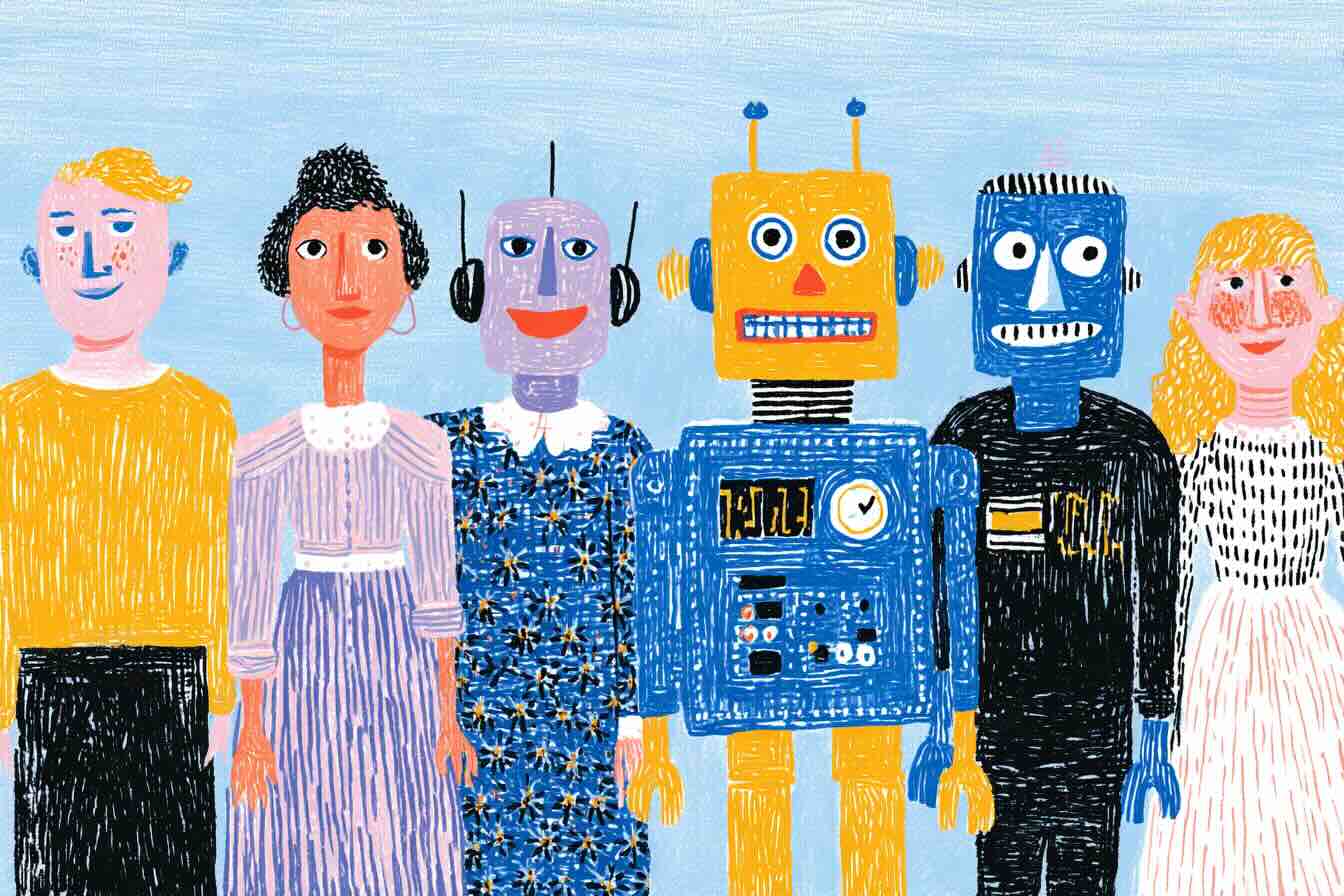
The new T-shape in the AI-era needs depth in one audience, with breadth across the full supply chain. A Mini CMO for Enterprise Healthcare. A Mini CMO for Mid-Market Fintech. Each of them can write, brief, edit, analyse, and sell. They go deep on their audience’s relationship to your product, the narrative that lands, the channels that actually convert.
The Mini CMO isn’t trying to master every craft. They’re trying to master one audience.
Here’s what every person on this new-shaped team needs to be:
🚀 They need to be able to map pain to product, and write messaging from that mapping. This is where most campaign managers get stuck. They don’t know the product deeply enough. They don’t know the specific pains of their audience. So they can’t write a messaging framework without leaning on PMM. The Mini CMO doesn’t lean. They own the expertise of their audience’s pain, how they use the product, and the messaging that connects them.
🚀 They need to be customer-obsessed in practice, not just in aspiration. Minimum one live customer conversation per week. Not a quarterly interview. A working rhythm.
🚀 They need to be creative, with a bias for narrative hooks. Can find the angle. Can spot when the brief has no angle and name that before the work starts.
🚀 They need to be a writer, or at least be able to judge what good writing looks like. AI produces volume. Only a writer knows what’s worth shipping.
🚀 They need to be channel-native for their audience. Knows where their buyers actually are, which in B2B right now is often not where your corporate marketing channels are pointed.
Notice what’s not on that list? “Deep in a specific functional craft.” That’s a choice. Functional craft still matters enormously. It just doesn’t live in the same role anymore. Brand craft lives with a Brand custodian. PMM’s strategic work lives with a PMM custodian. Those custodians set the standard that every Mini CMO’s work has to clear.
One last note before we go role-by-role: “Mini CMO” has been the archetype I’ve been using to paint the picture. The formal title I use is GTM Marketer — the audience-owning seat in the two-tower structure, reporting to a Head of GTM.
How each role reshapes
The new T-shape changes what each traditional marketing role looks like. Some become craft custodians at a higher altitude. Some roles, duties, and expectations get redistributed into the GTM Marketer. Some split. None disappear.
For each role, the picture covers:
- What the role still owns in the new model
- What shifts to the GTM Marketer (audience-specific application)
- What AI absorbs
- The legacy weeks vs. the new model weeks — what the calendar actually looked like before, and what it looks like after
- The Hand-Off Tax savings — the calendar time and capacity reclaimed when the legacy hand-offs collapse
Craft Custodians
The category that needs the most framing. The language “craft custodian” can sound strategic and removed from the work. It isn’t.
| What a craft custodian IS |
|
|---|---|
| What a craft custodian ISN'T |
|
Does the craft custodian end up in an ivory tower? Absolutely not.
The altitude shift is real, and it’s easy to misread as distance. A legacy brand manager who opened Figma every day and reviewed every piece of creative isn’t doing that anymore. You may feel the pull to read this as Craft Custodians moving UP and moving AWAY from the work. The reality is the opposite.
In the legacy model, custodians get looped in at the end. A GTM Marketer (or a campaign, field, or content lead) writes a brief. An agency or in-house team builds the thing. The brand, comms, or PMM lead gets the draft with two days to approve. That’s the service-centre pattern, and it’s the one that breeds resentment on both sides. Custodians feel like police. The teams they serve feel audited.
In the new model, custodians get looped in at the start. They’re in the strategy room with GTM Marketers and the Head of GTM. They have veto on direction, not just polish. They shape the templates, frameworks, and AI-readable standards that every audience team runs against. Less time reviewing outputs. More time designing the system that produces better outputs by default.
That’s more hands-on, not less. The hands just move earlier.
Custodians own the cross-audience craft standard at the org level. GTM Marketers own the audience-specific application. Both are hands-on. Both are load-bearing. Neither can do the job alone.
Organise by audience, not by function.
Plot Twist: Your team doesn’t need an AI strategy.
Sort of. I’m intentionally being clickbait-y because the core of this statement is true. Your team doesn’t need an AI strategy. It needs an operating model that lets AI do what AI is actually good at, and lets your people do what they’re actually good at. GTM Marketer + AI is how I’ve built that. Four times now. And it’s the only model I’d run again and again.
Each of the roles above reshapes. Some become craft custodians. Some get redistributed across the GTM Marketer and other custodians. Some split. None disappears. And when the model is running, marketers feel like owners of a domain instead of contributors to a queue.
Next up: The 12-Month Path: From Legacy B2B Marketing to AI-Native — the operational playbook for actually migrating your team to this model. (Coming soon.)